Architect@Work edition Rotterdam, September 9 and 10, 2026
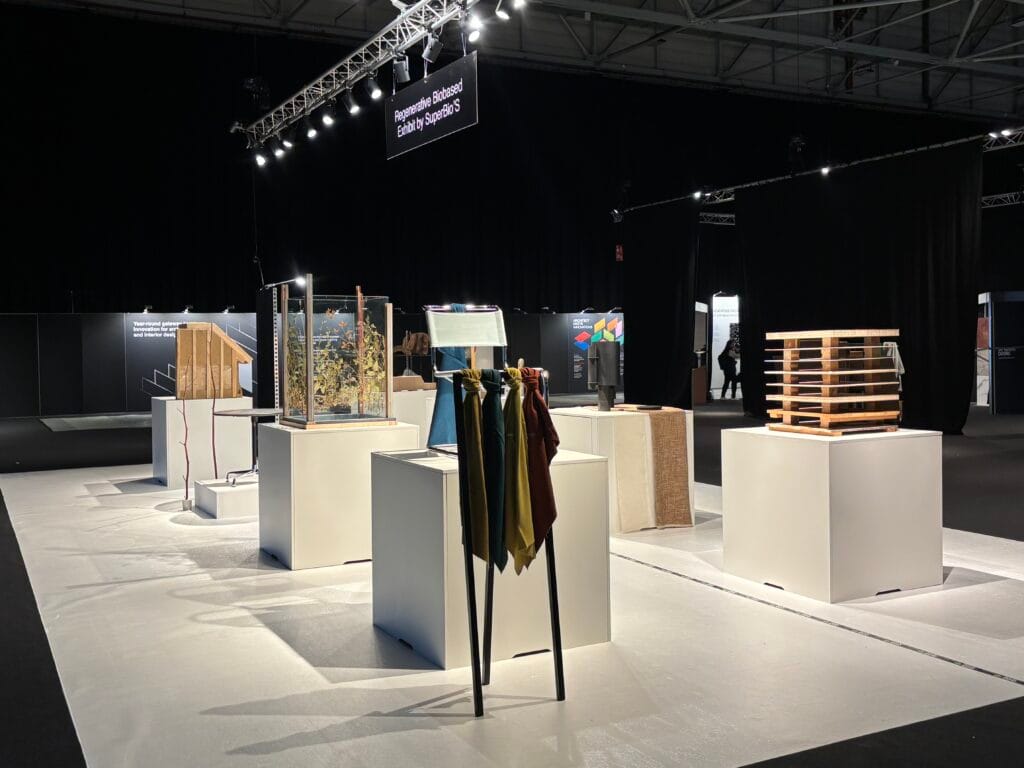
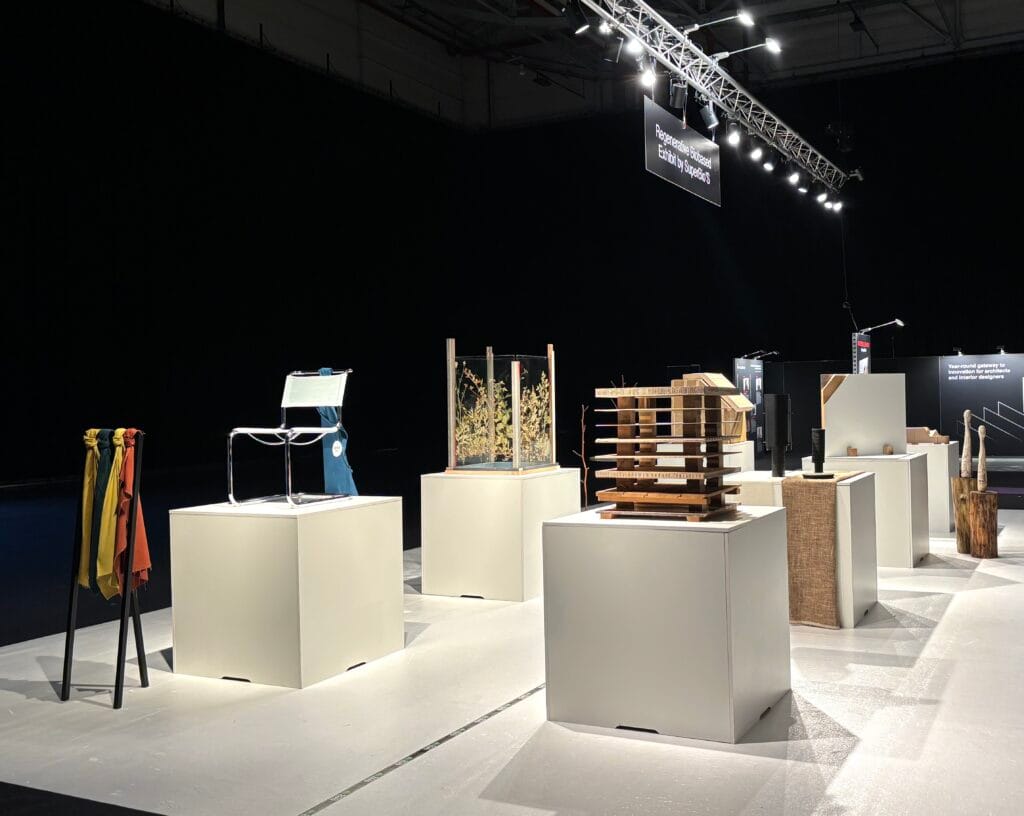
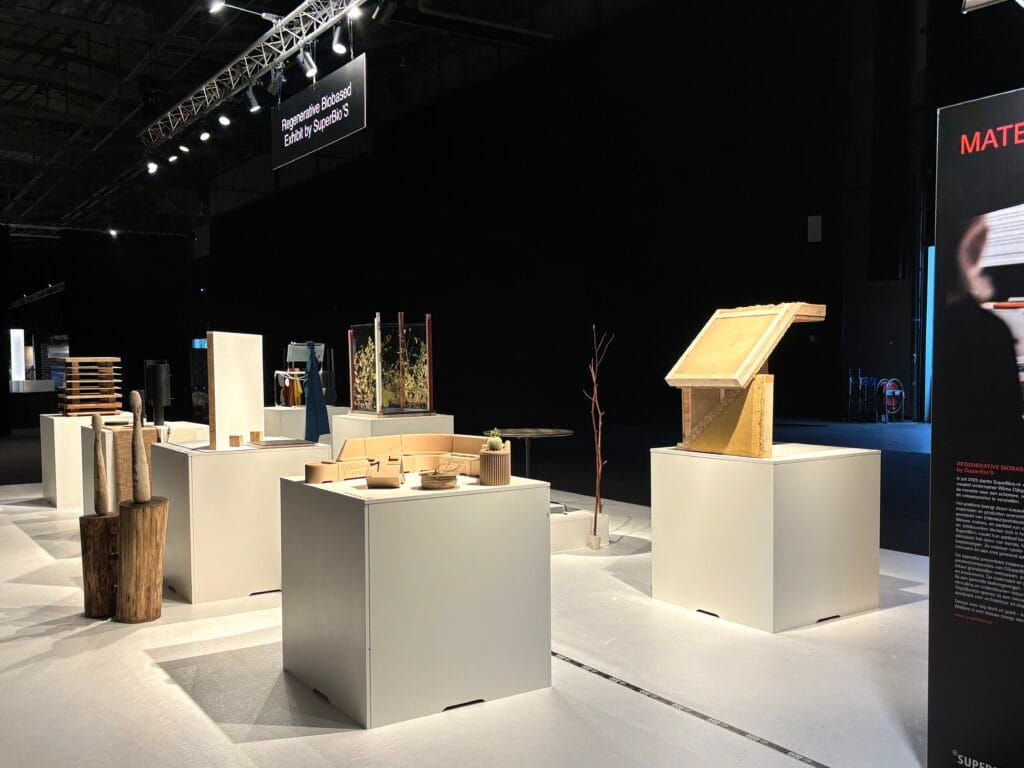
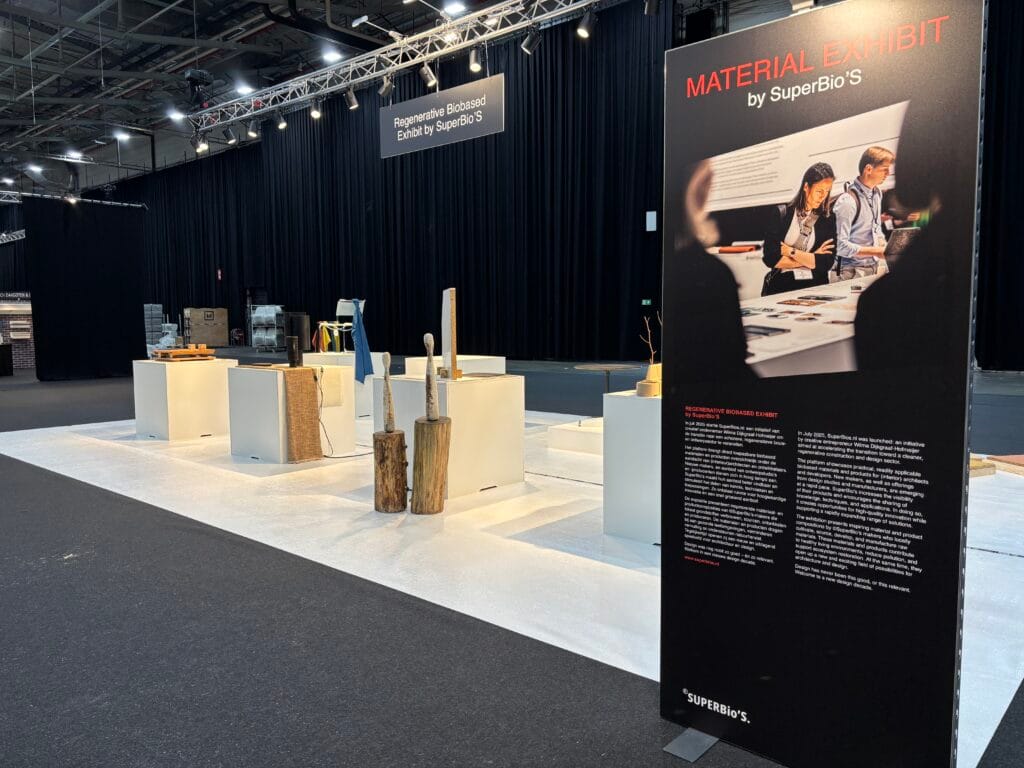
Participants & products:
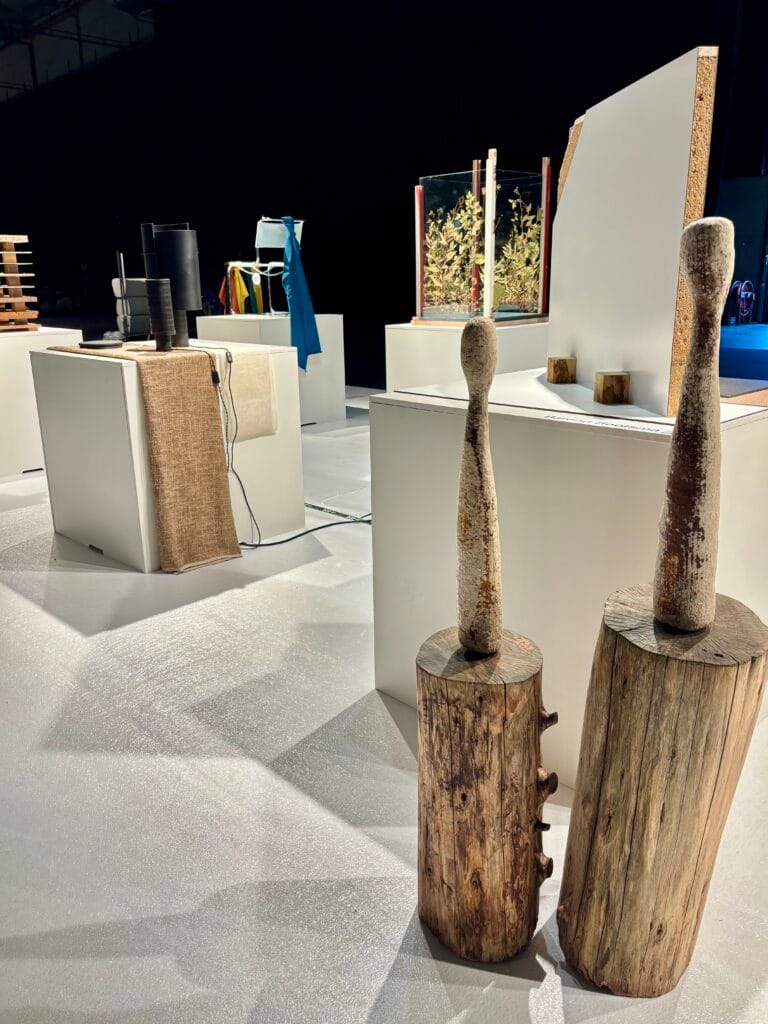
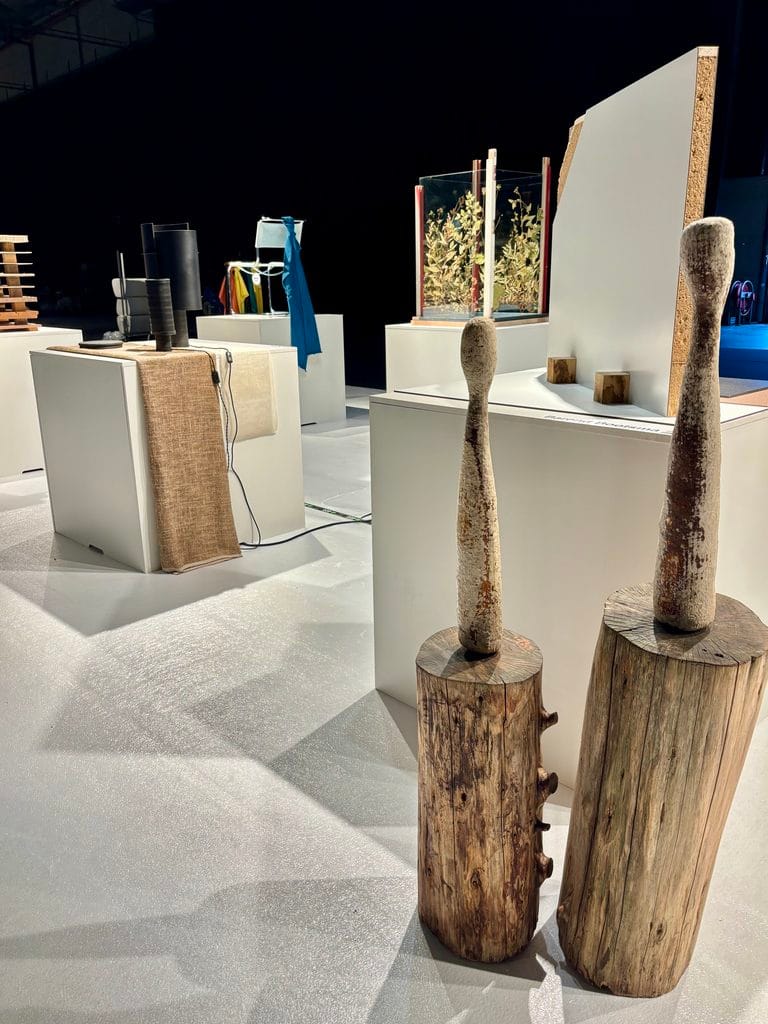
- Barend Bootsma, Fungi Figures – sculptural mycelium objects
- BioPanel, Biobased Door Panel
- Cirq Wood, Reuse wood and thermally modified coniferous wood with biological fire retardancy
- Crush-on-Nature, Recycle floral glass panels in reused frame wood
- Hembased, vegetable colored, palm leaf filament for 3D print
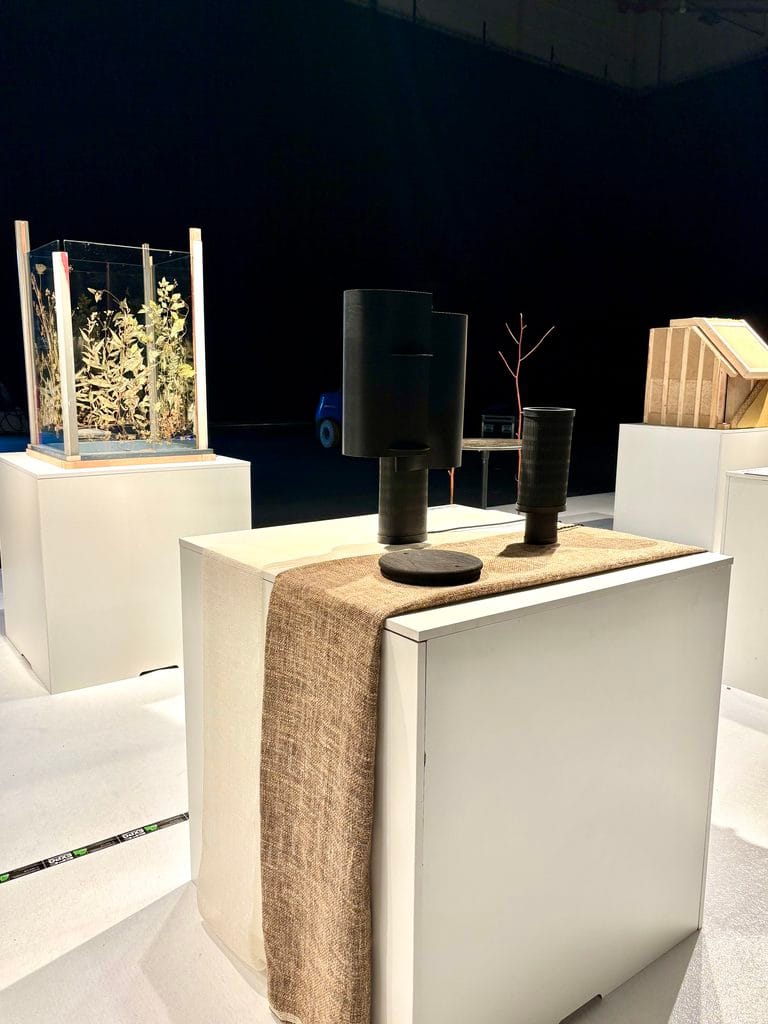
- LinFin, Sculptural table lamps - fine design - from Biopanel
- LOADS Collection, S 33. Designed by Mart Stam in 1926 covered with Dutch wool, biodynamic cotton and vegetable dyes.
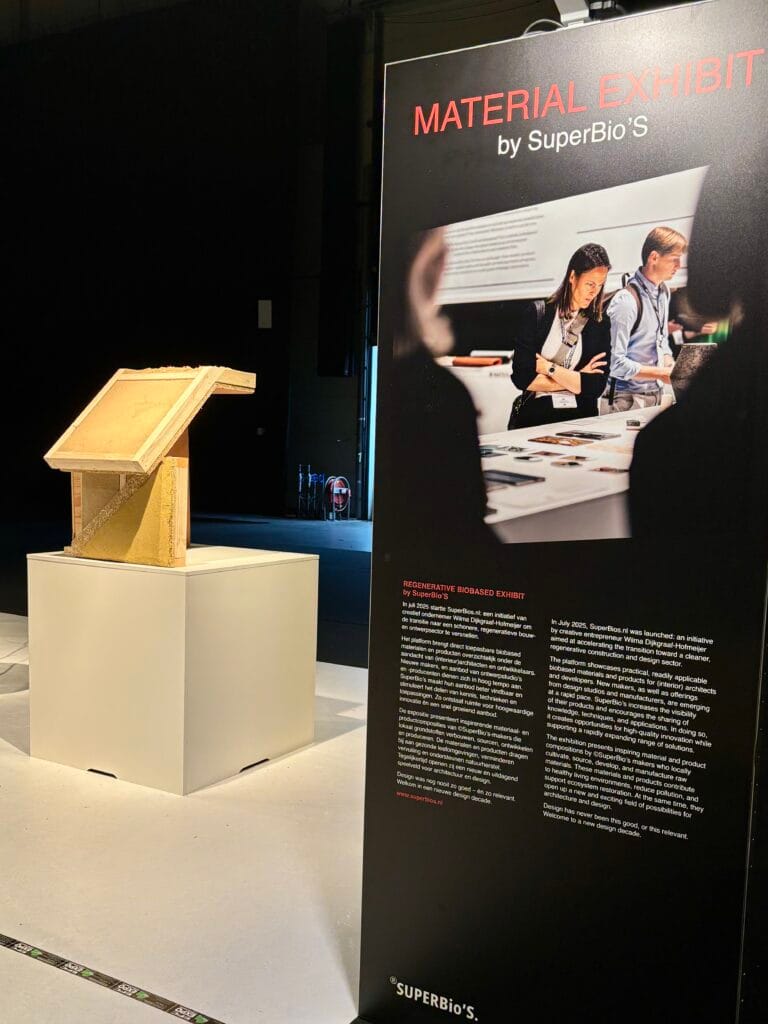
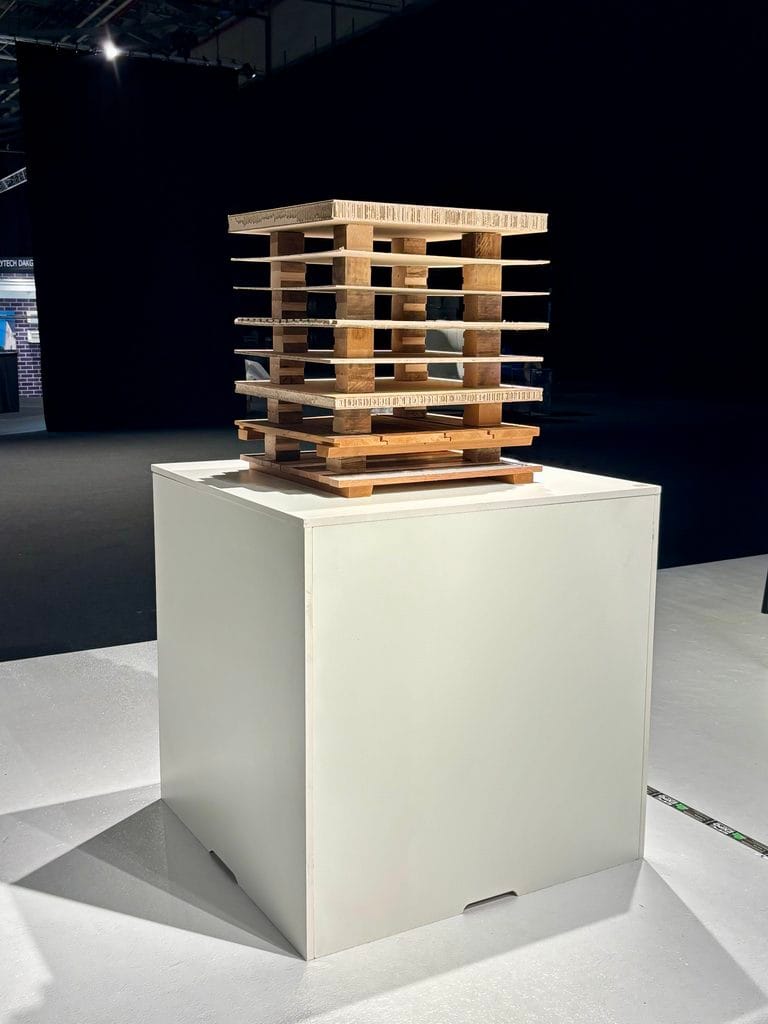
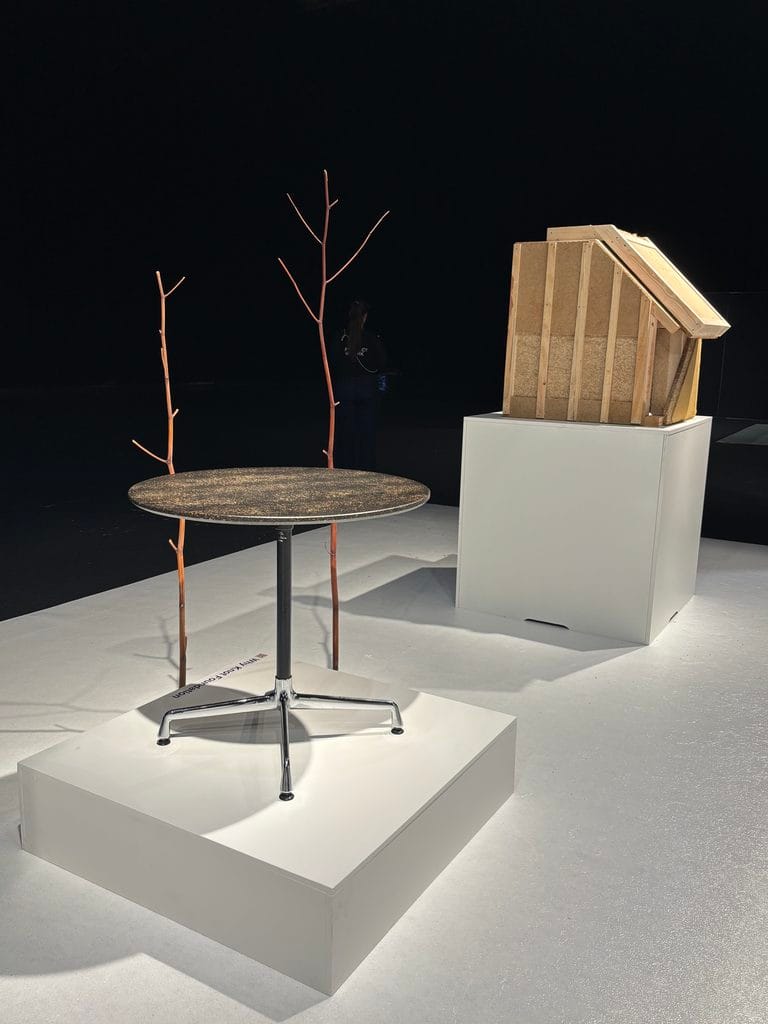
- Orange Elephants, compact Building Model of roof and wall based on miscanthus with red loam from the Peel.
- SAM Panels, various collection of constructive and decorative sheet material.
- Why Knot Foundation, premium table top made of invasive Japanese Button on classic Vitra base
Compiler of the Expo:
WDH-NL/SuperBio's, Wilma Dijkgraaf-Hofmeijer
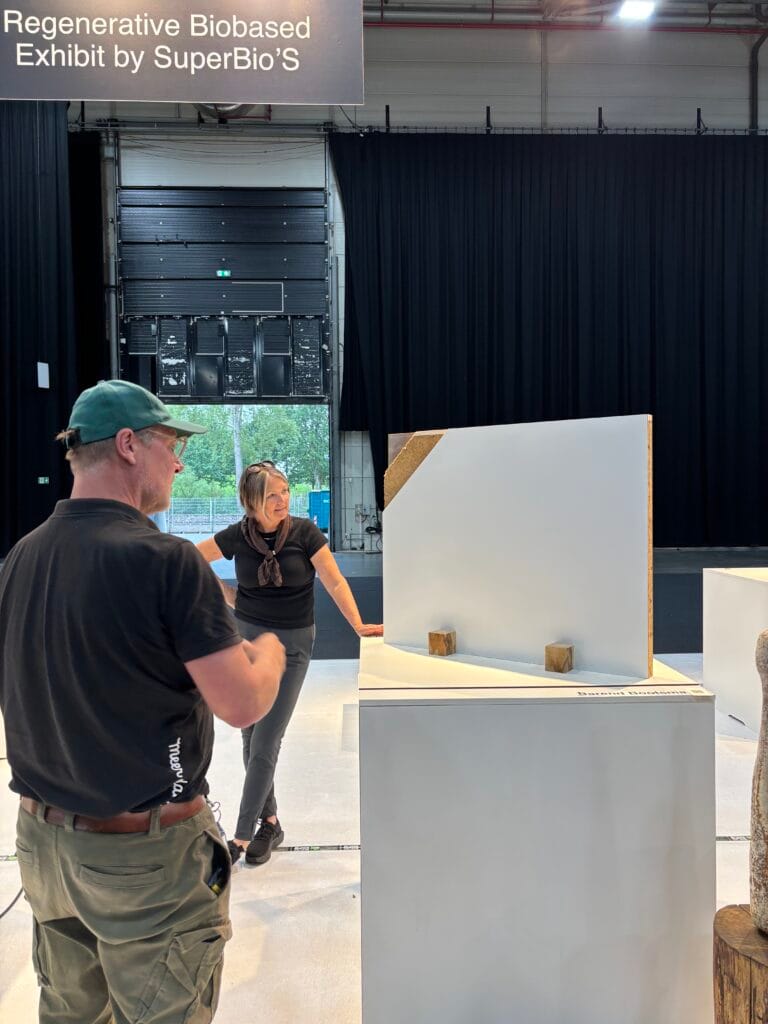
1. Barend Bootsma,
Fungi Figures – sculptural mycelium objects
See also the video
DIMENSIONS
Fungi Figures – approx. 70x10x10 cm. Other sizes and shapes on request.
COMPOSITION
Mycelium, wood chips from residual flows, unbleached organic cotton and a biobased coating.
PRODUCT & APPLICATION
Fungi Figures are handmade spatial objects in which mycelium is used not only as a material, but also as a designer. Mycelium consists of fine hyphae, hyphae, which together form a natural network. During the growth process, this network connects the wood chips and at the same time forms the characteristic skin of the object.
The base is sewn from unbleached organic cotton and filled with a mixture of wood chips from residual flows. The mycelium then grows through the material. Because this process is natural, each object develops its own structure and appearance.
After the growth phase, the object is dried and finished with a biobased coating. This makes the mycelium inactive and odorless. The objects are suitable for dry indoor spaces and can be used as an autonomous art object or as a spatial element within interior projects. They are not suitable for damp areas or outdoor use.
The versions shown are approximately 70 cm high and have a diameter of 5–10 cm, excluding base. Other sizes and shapes are possible on request. The objects are made to order, with a delivery time of approximately 4–6 weeks. Price on request.
Barend Bootsma hyfen on superbios.nl
ABOUT BAREND BOOTSMA
Background
Barend Bootsma is a design engineer, trained at TU Delft (MSc Integrated Product Design). He designs and builds physical and digital products, and works with living materials such as mycelium.
Experience
Barend built the Mush Room for Hotel de Groene Afslag, a hotel room for residual flows and self-grown mycelium. He designed Reharvest, an exhibition about the applications of residual flows from greenhouse horticulture, for the Netherlands Innovation Foundation. Fungi Figures emerged from these projects.
Drive
The drive behind these images is to make us feel that we share our spaces with living beings who often remain invisible, thus encouraging us to opt for collaboration with natural processes more often.
Challenge (vwb material or in the industry/market, testing, etc.)
The challenge is to give the living material enough direction without limiting the natural process too much. The shape and skin can be influenced via mold, substrate and environment, but the result can never be fully predicted.
Purpose (s) e/o dream
The dream is to work with larger images, groups, and entire spaces in which people are pleasantly surrounded by natural materials.
Contact details on superbios.nl:
2. BioPanel,
Biobased Door Panel
COMPOSITION
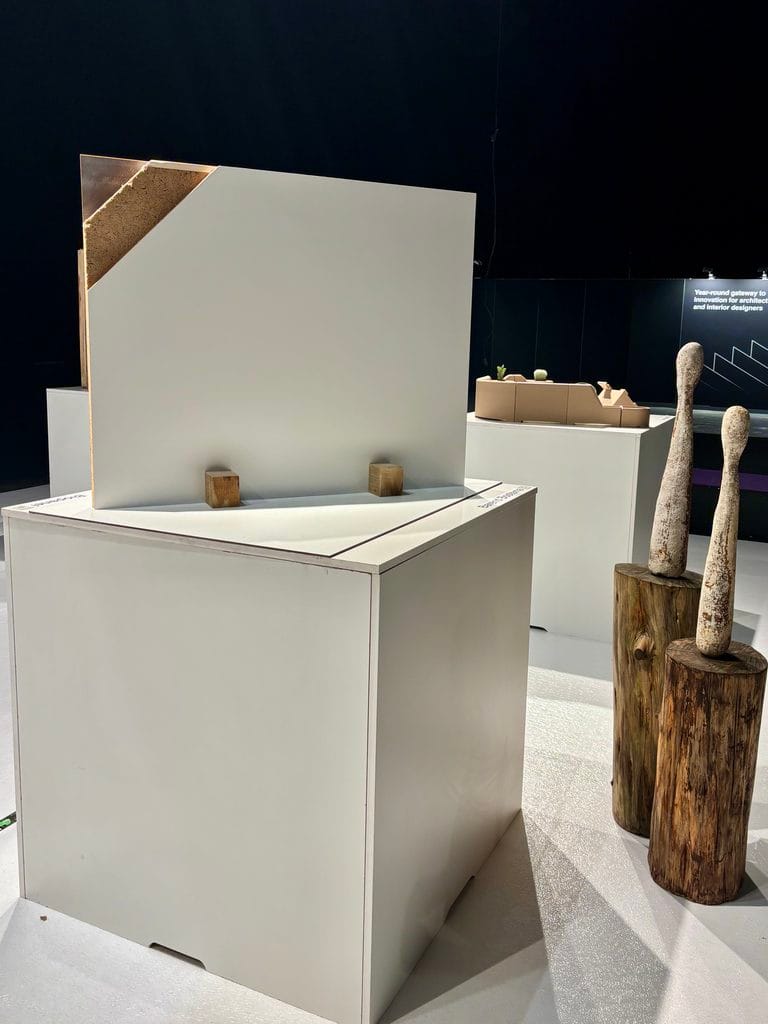
Wood foam core based on renewable raw materials, BioPanel industrial hemp coatings and bio-PLA, finished with water-based lacquer and adhesive systems.
PRODUCT & APPLICATION
BioPanel has been developing fossil-free sheet material for indoor and outdoor applications since 2018. The material consists of industrial hemp and bio-PLA and is fully recyclable into a new, equivalent product. According to the LCA, emissions are 0.02 kg of CO₂ per kilogram of plate.
A recent application is the Organic Door Panel, developed with Rodenberg Türsysteme, Lignew Eco Wood Foam and Auro. This sandwich construction combines a core of wood foam from renewable raw materials with BioPanel coatings made of hemp and PLA. Biodegradable, low-emission paint and adhesive systems and natural pigments are used for finishing.
Contact details on superbios.nl:
BioPanel
3. Cirq Wood,
reuse wood and thermally modified coniferous wood with biological fire retardancy
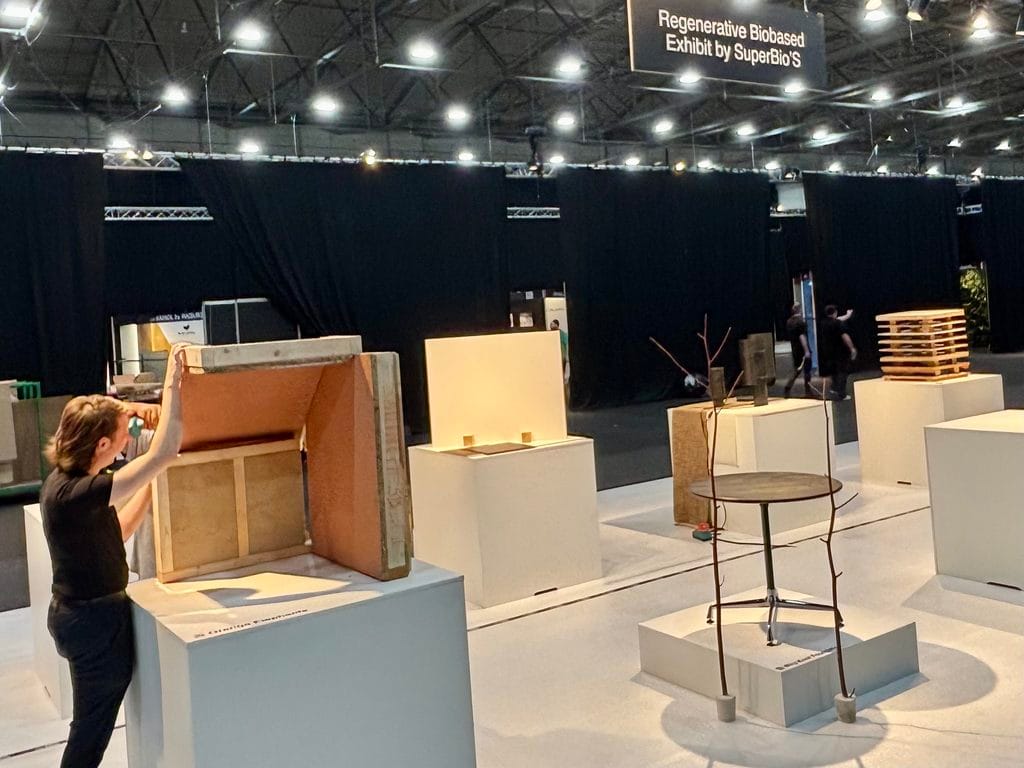
Featured on Architect@Work, SuperBio'S Exhibit 'Regenerative Biobased':
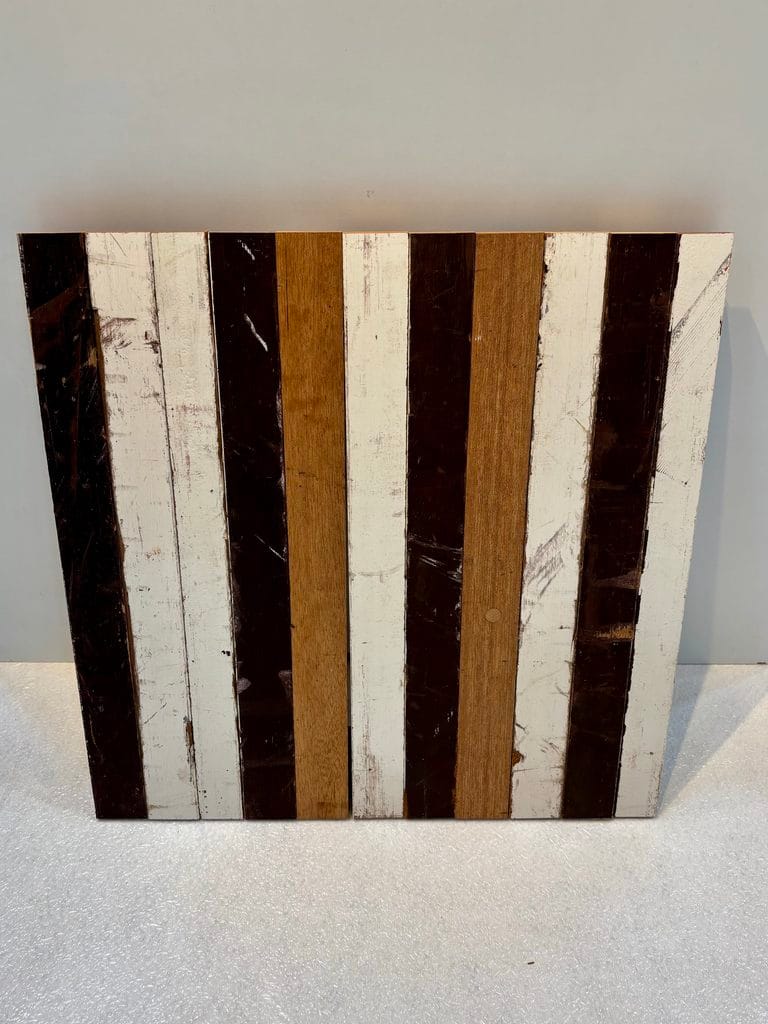
Thermally Modified Reclaimed Firing Z Profile Facade Panel, FSC Recycled 100% (Board 1) and Reclaimed Hardwood Insert Sailors, FSC Recycled 100% (Board 2)
3. Cirq Wood,
reuse wood and thermally modified coniferous wood with biological fire retardancy
And harvested frame wood in the recycle glass object from Crush-on-Nature.
CirQ Wood is a distributor of Reclaimed Insert Kozijnhout. Upon entry from demolition, each wood lot is registered by a core member of Coöperatie Insert by origin, type of wood, head size and volume. The wood is then scanned for metals, sawn and optimized, after which it is finger-loaded and laminated to frame wood (interior and exterior), window wood and door wood. Sowers can be used for interior walls, ceilings or various specific (furniture) applications.
Another category is the thermally modified coniferous wood that is exclusively modified by Platowood for CirQ Wood. It extends the lifespan of the coniferous wood and improves shape stability. An organic (non-leaching) fire-retardant treatment is also possible. Applications of modified coniferous wood are mainly cladding and decking. In addition, untreated reused wood is also used for, among other things, interior wall coverings, ceilings, floors, beams and specials.
All CirQ Wood reused wood comes with FSC Recycled 100% certification.
Contact details on superbios.nl:
Cirq Wood
4. Crush-on-Nature,
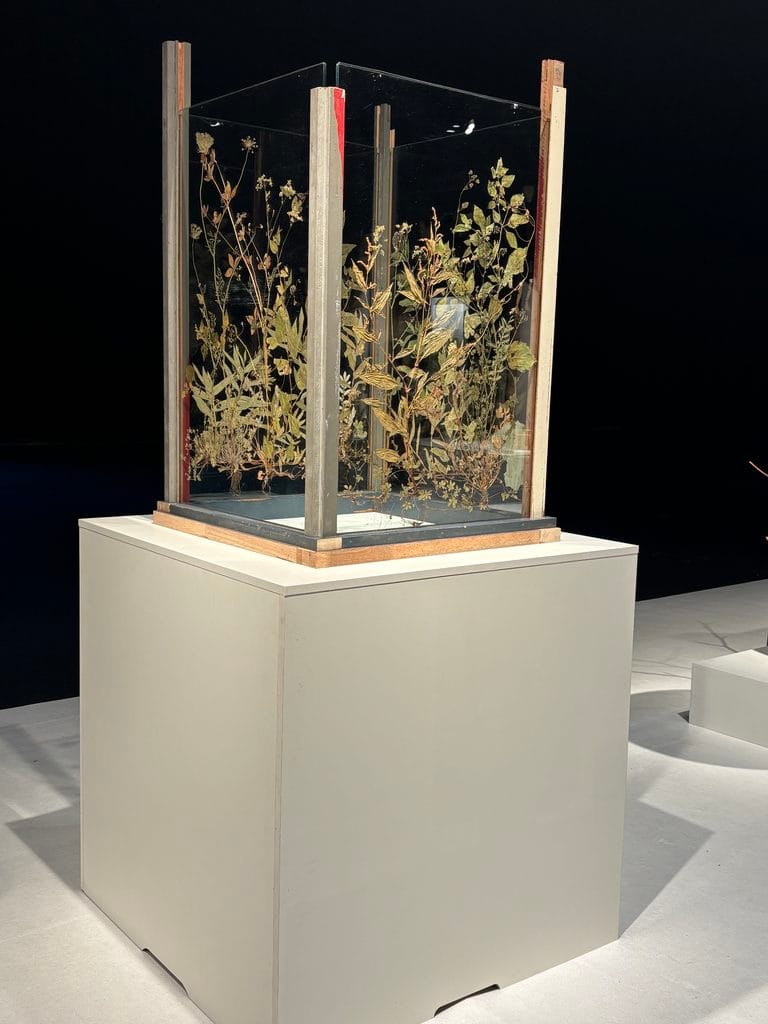
Glass panels with dried flowers in frames made of reused wood from Cirq Wood.
The (reused) glass panels from Crush-on-Nature bring nature into the interior of buildings and tell the story of the landscape in the region or emphasize the client's relationship with natural flora.
The reused hardwood frame wood comes from CirQ Wood, distributor of Reclaimed Insert Kozijnhout.
Background
Crush on Nature brings wild plants into glass walls, panels and furniture objects. The large collages of wild plants create a fine environment: they filter cans and have proven to be soothing.
But there is a deeper goal. In this new context, a different appreciation for what we typically call "weeds" is emerging. My mission is to broaden the field of view and really get to know the plants with whom we share our living environment.
I collect the wild plants on roadsides and along the ports around the studio in Rotterdam. For a project I prefer to look for the plants near the location. This is how the interior reflects the environment.
In 1991 in the Australian desert, an Aboriginal woman asked me an intriguing question: "What are you listening to at home?" She wasn't referring to music. "During the day I listen to the crickets. At night to the frogs." Her words exposed the core: we have lost the connection with our direct biotope. Since then, as a designer, I challenge myself and others not to see the nature around us as a backdrop, but as an essential part of our daily existence.
The collages are placed in the space between acoustic glass walls or as separate wall panels. I work for the individual panels with pre-used glass
The plants are dried and will discolour in the first year, then they will keep their beautiful light shades. They don't decay, they turn into a timeless, lasting interior element that will last for years.
Contact details on superbios.nl:
5. Hembased,
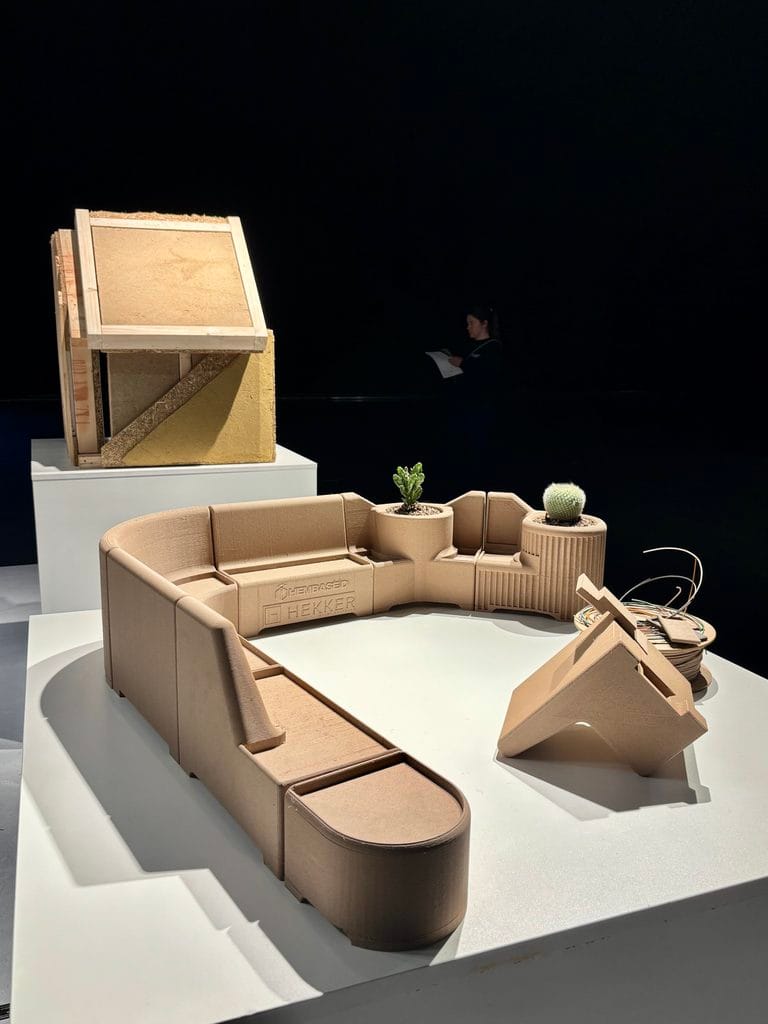
vegetable colored, palm leaf filament and 3D printed furniture
Specialization
Hembased's strength lies in developing materials that are interesting from both a technical and aesthetic perspective. After all, a material should not only tell a sustainable story; it should also be beautiful, feel pleasant, be applicable and meet the requirements of architects, interior designers, producers and end users.
That is why Hembased looks at the entire chain: from raw material and recipe to production, processing, application and possible reuse or return flows.
The combination of materials technology and design offers opportunities to develop new applications for interiors, furniture, architectural elements and customization, among other things.
Experience and development
Hembased has built up a lot of knowledge about the possibilities and limitations of biobased material based on the development of the material. The development is a continuous process of experimentation, testing, improvement and application.
Practical experience is essential. By working together with various disciplines, Hembased therefore wants to better understand what the market needs and how the material behaves in real applications.
A design assignment
Hembased believes that the transition to biobased and circular materials is not only a technical task, but also a design assignment. New materials offer the opportunity to discover new aesthetics, new applications and new ways of producing and designing.
The ambition is to develop a material that is not only an alternative to existing materials, but the creation of actually new possibilities.
Invitation to chain collaboration
Hembased believes strongly in collaboration. The development of new materials is not only done from a laboratory or production environment, but rather by bringing together knowledge and experience from different disciplines.
That is why they contact: during the fair
Architects and interior architects
to investigate new applications and apply the material in concrete projects.
Designers and product designers
to develop new forms, applications and aesthetic possibilities.
Producers and processors
to investigate how the material can be processed efficiently and on a larger scale.
Testing and knowledge institutes
for materials research, testing, certification and further technical development.
Brands and project partners
to realize pilot projects and concrete applications.
We are particularly interested in partners who not only ask “what is this material?”, but also “what can we make with this?”
Hembased wants to be part of the movement in which biobased materials grow from a niche solution into a self-evident choice within architecture and interior design.
Contact details on superbios.nl:
Hembased
6. LINFIN,
hemp panel table lamps made suitable for sculptural lamps
Elisabeth and Victor van der Stouwe together form LINFIN Studio, a design practice in Maastricht where materials research, craftsmanship and sculptural design are central. Their work moves between product design, art objects and interior pieces, always with a strong focus on natural materials and a serene, timeless aesthetic.
Experience
Since 2012, they have been building a studio known for refined craftsmanship, material expertise and a minimalist signature. They work intensively with leather, linen and biobased sheet materials, vintage oak and combine traditional techniques with contemporary experiments. Their projects range from sculptural lamps and bags to customization for high-end hospitality and cultural institutions.
Drive
Their motivation is clear: to create objects that bring peace, that allow the beauty of natural materials to speak and that have a long lifespan. Aesthetic, technical and emotional. LINFIN sees design as a form of attention: attention to material, to craftsmanship and to the people who live with the object.
Challenge
The biggest challenge lies in working with honest, biobased materials that are not always forced. Hemp, sugar beet‑PLA, linen and organically tanned leather require patience, testing and refinement. Every new form requires a balance between sculpturality, functionality and material behavior. That very search makes the work meaningful.
Purpose & Dream
LINFIN wants to continue building a collection of sculptural objects in the coming years that bring together regenerative materials and crafts. The dream is to gain an international position within the domain of material-driven design with objects that not only bring beauty, but also a story of origin, integrity and future-orientedness.
Contact details on superbios.nl:
LinFIN
7. LOADS Collection S 33. Designed by Mart Stam in 1926 covered with Dutch wool, biodynamic cotton and vegetable dyes.
PRODUCT
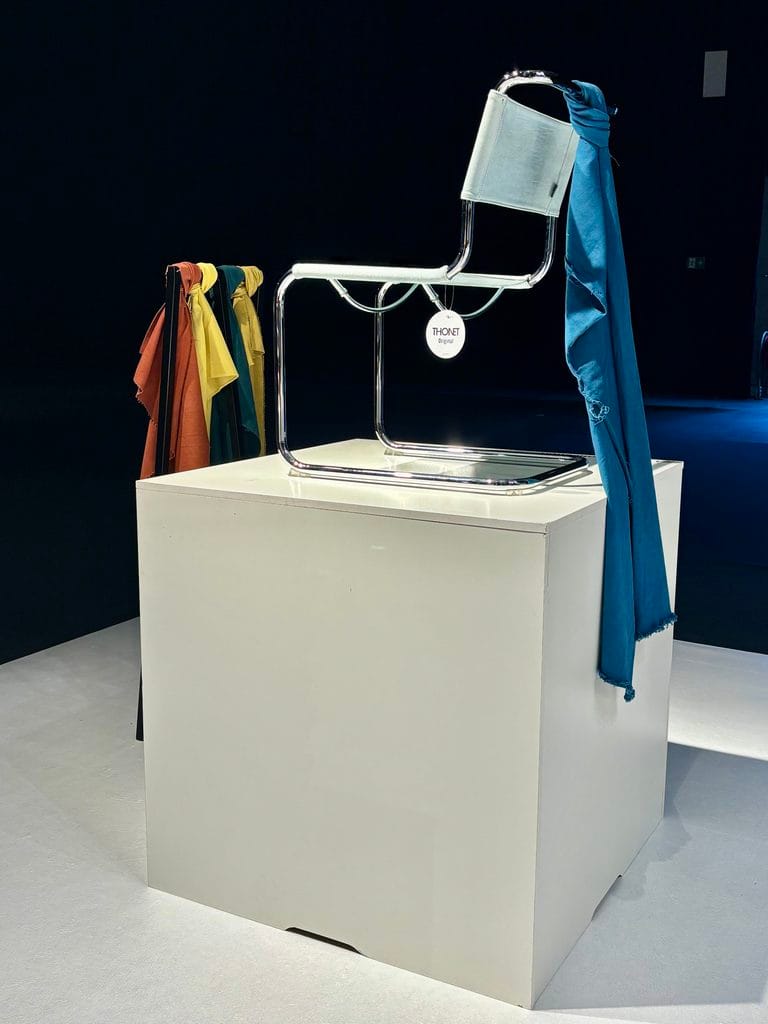
Regenerative interior textiles – upholstery and curtain fabric made of Dutch wool and biodynamic cotton, colored with vegetable dyes and presented on the Thonet S 33
COMPOSITION
Dutch wool, Demeter certified biodynamic cotton and vegetable dyes. Applied as a furniture fabric on a Thonet S 33 from Mart Stam; with drapage of the same curtain fabric and vegetable dyes.
PRODUCT & APPLICATION
The LOADS Collection develops interior textiles from natural, traceable raw materials and regenerative agriculture. Dutch wool and biodynamic cotton provide the basis for furniture and curtain fabrics that are colored with vegetable dyes. The curtain fabric is woven from 365 gram Demeter certified biodynamic Egyptian cotton grown at SEKEM in Belbeis, Egypt. The cotton is cleaned, spun and woven on the same site at the GOTS-certified NatureTex textile factory. The fabric is colored with 100% vegetable dyes, including from biodynamically grown woad from the Netherlands. Confection takes place at the Van Hulley social studio in Groningen, and in Portugal we also have a Demeter-certified studio. The fully biodegradable monostof is suitable for various interior projects; a Dutch wool lining is possible on request.
The presentation thus makes the entire material chain visible: from soil, plant and fiber to color, textiles and interior application. An existing design icon will therefore become the stage for a new generation of interior textiles, in which material origin, natural color and restoration of soil and biodiversity are central.
About LOADS Collection:
Background/specialties/experience/drive
Born from Studio Claudy Jongstra, with 30 years of experience in vegetable dyeing, LOADS was created with the drive to make vegetable paint and biodynamic production processes scalable and more accessible to the mid-range segment. Not only intended for haute couture and craftsmanship, but as a seriously sustainable alternative to a broader segment. We are now slightly more expensive because we are small, but hope to close that price gap in the future when we have more scale.
Challenge/suggestion (s) (with regard to material or in the industry/market, testing, etc.)
Lightfastness is good enough for all kinds of applications, now scale is the next step. Large projects such as the Exchange Hotel in Amsterdam help enormously in terms of scale.
Purpose (s) e/o dream
That vegetable paint has become a serious alternative, that you often see in your daily living environment, and that you suddenly see dye plants on agricultural fields.
Contact details on superbios.nl:
LOADS Collection
8. Orange Elephants,
compact Building Model of roof and wall based on miscanthus with red loam from the Peel.
PRODUCT & APPLICATION
Orange Elephants shows in a compact building model how well renewable fibers can be used in a complete building envelope. The insulated roof slab based on Miscanthus, also known as elephant grass, is first. Orange Elephants already processes this fast-growing fiber into plates and insulation material for construction applications.
Wall structure from inside to outside:
. red peel loam
. straw plate (from Bioblow)
. hard miscanthus foam board
. raggel work with exterior facade plate
Roof element from inside to outside:
. loam
. straw fibreboard
. mycanthus foam insulation
The model shows how vegetable fibers cannot be used as loose material, but as a coherent building system.
Contact details on superbios.nl:
Orange Elephants
9. SAM Panels, various collection of constructive and decorative sheet material
Productions of our own sheet material and place material production for third parties in dry and wet processes are underway at the Venlose SAM Panels.
The collection now includes
Acoustics hemp:
An acoustic panel made entirely of hemp. The back consists of a woven hemp/flax felt and the slats on the front are the SAM Solid 7.5 hemp. The SAM Solid is made from hemp fabric that comes from the Northern Netherlands.
Application: as wall finish and ceiling finish.
Decor
SAM Panels' latest product line is called SAM Decor. With SAM Decor, SAM Panels is launching a new collection in which their sheet material is finished with a decorative paper of your choice. Of course, the decoration paper is biobased.
Application: vertical surfaces.
Pure tomatoleaf
The SAM Pure is a 2.5 mm biolaminate made using only water, pressure and heat. This product is made from tomato leaves from South Holland.
Application, for example, finishing, rear walls, cover plate doors, printing, subflooring.
Solid Sorghum
This product is made with Sorghum from North Brabant. The SAM Solid is available from 5 mm.
Applications include roof boarding, desktops, I-girders, frame wood’ doors.
Light BPF
This product consists of digestate from cow manure and comes from North Brabant. The cow manure is collected from farmers fresh every day and then converted into biogas. We use the digestate's pitch-resistant faction as a raw material for our product. The core concerns honeycomb.
Examples of application are roof boarding, headboard bed, table tops.
Light II 25 grass
Made of roadside grass and from the South Holland Greenhub, with a honeycomb core.
Application: in situation where both constructive strengths and lightweight are necessary. In addition, also applicable for table tops with larger free spans.
Contact details on superbios.nl:
SAM Panels
10. Why Knot,
Premium furniture/table top made of invasive Japanese Button on classic Vitra base
Why Knot was created from the ambition to convert a persistent ecological problem into a valuable raw material. Why Knot develops high-quality materials from Japanese Knotweed, an invasive plant that causes major damage to ecosystems and infrastructure in the Netherlands and abroad. While the plant is usually only seen as waste, Why Knot shows that it can be a source of circular, regenerative materials.
In recent years, Why Knot has worked intensively with parties such as Rijkswaterstaat and ProRail. In these processes they noticed that materials from Japanese Knotweed are currently not suitable for exterior applications or (large-scale) construction products. The chain needed to process residual flows from this plant to scale is still in full development.
But parallel to these projects, a premium, natural-feeling material has been developed that is fully ready for high-quality interior applications: wall panels, finishes and unique design objects.
At the exhibition, Why Knot shows the new (coffee) table that makes the vision tangible. It concerns a circular object with
- a 100% natural table top made from Japanese knotweed fibers
- a reused classic design base
- diameter 80 cm, height approx. 74 cm
The table embodies what Why Knot stands for: turning an ecological problem into a valuable resource and a design that contributes both to the restoration of outdoor ecosystems and to healthy, natural indoor environments.
At the exhibition, Why Knot shows the new (coffee) table that makes the vision tangible.
Contact details on superbios.nl:
Why Knot Foundation
Want to stay informed about biobased newcomers and products?:
Subscribe to the monthly email newsletter:
https://superbios.nl/aanmelden-nieuwsbrief/